
Ending Sexual Exploitation
A collaborative between the Chicago Alliance Against Sexual Exploitation (CAASE), HEART, the Rahma Network, and KARAMAH, this toolkit is for groups within Muslim communities and any other individuals of faith who are passionate about ending sexual exploitation. This toolkit provides background information on issues surrounding prostitution and other forms of sexual exploitation and can be used to raise awareness and mobilize your community to join the fight to end sexual exploitation.
Tags: Avenues of Support, Barriers to Reporting, Healing, LGBTQ, Power and Control, Sexual Violence 101, Spiritual Abuse
Parent Toolkit: Sexual Violence
This guide offers parents information on sexual violence and tools on how to have ongoing conversations on this important topic throughout childhood and adolescent. Written in a FAQ format, you will find the following information in this guide: background information on sexual violence, including definitions and statistics, how to recognize if your child is a victim of sexual violence and tips on how to have these conversations in an age-appropriate manner with each of your children.
Tags: Avenues of Support, Healing, Mental Health, Parenting and the Sex Talk, Sexual Violence 101
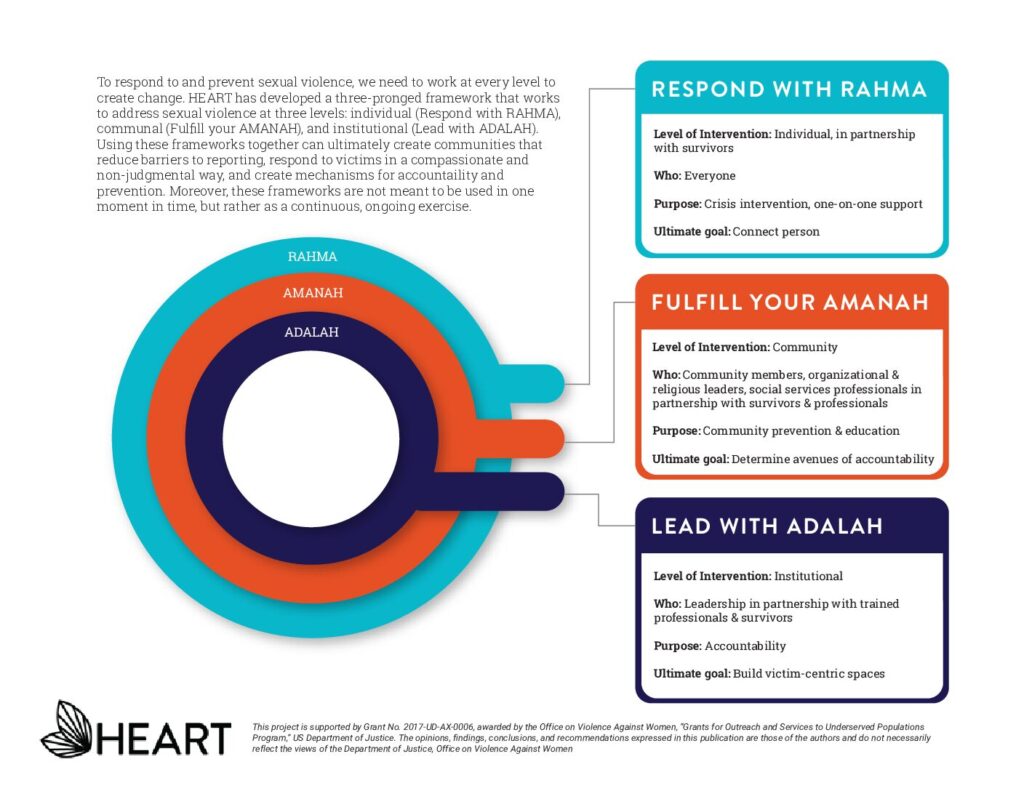
RAHMA-AMANAH-ADALAH Frameworks
To respond to and prevent sexual violence, we need to work at every level to create change. HEART has developed a three-pronged framework that works to address sexual violence at three levels: individual (Respond with RAHMA), communal (Fulfill your AMANAH), and institutional (Lead with ADALAH). Check out the accompanying handouts to learn more about the RAHMA, AMANAH, and ADALAH frameworks in our resource library as well.
Tags: Fulfill your AMANAH, Healing, Institutional Change, Lead with ADALAH, RAHIM, Healing, Responding with RAHMA
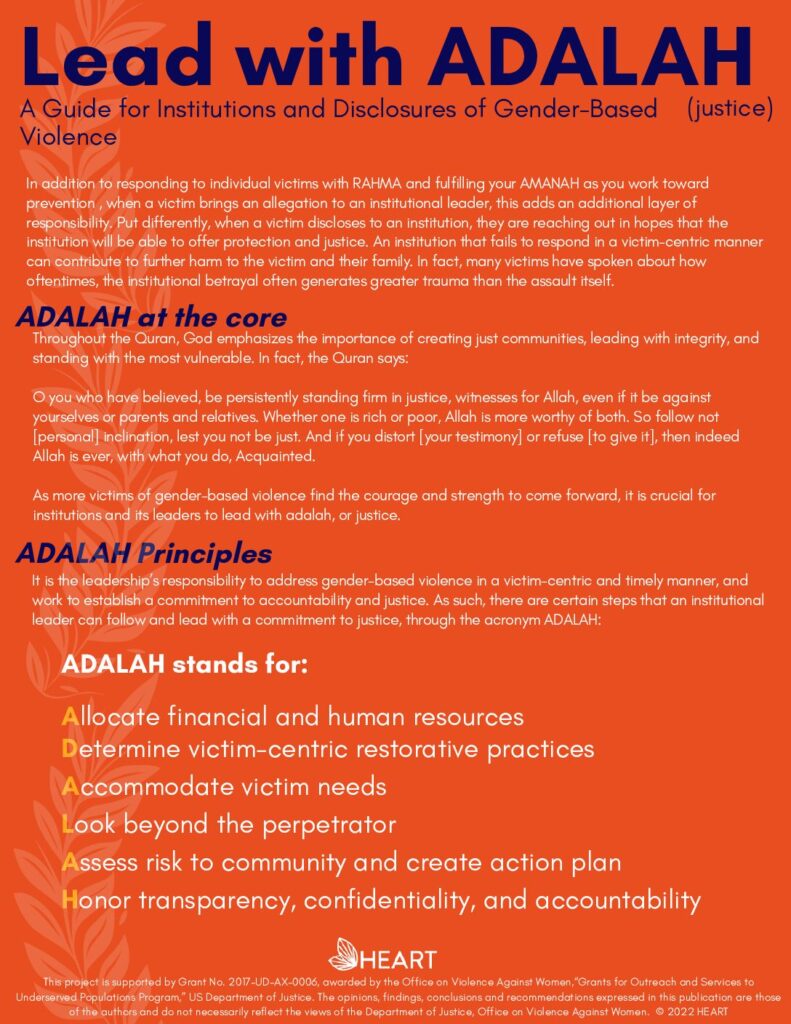
Leading with ADALAH: Framework
As more victims of sexual violence find the courage and strength to come forward, it is crucial for institutions and their leaders to lead with ADALAH, or justice, by addressing sexual violence in a victim-centric and timely manner, and working to establish a commitment to accountability. In addition to responding to disclosures with RAHMA and working toward prevention to fulfill an AMANAH, the ADALAH principles offer organizational leaders with steps that they can take to ensure that they are equipped to address sexual violence disclosures with a victim-centered, trauma-informed, transparent approach.
Tags: Avenues of Support, Healing, Institutional Change, Lead with ADALAH, RAHIM
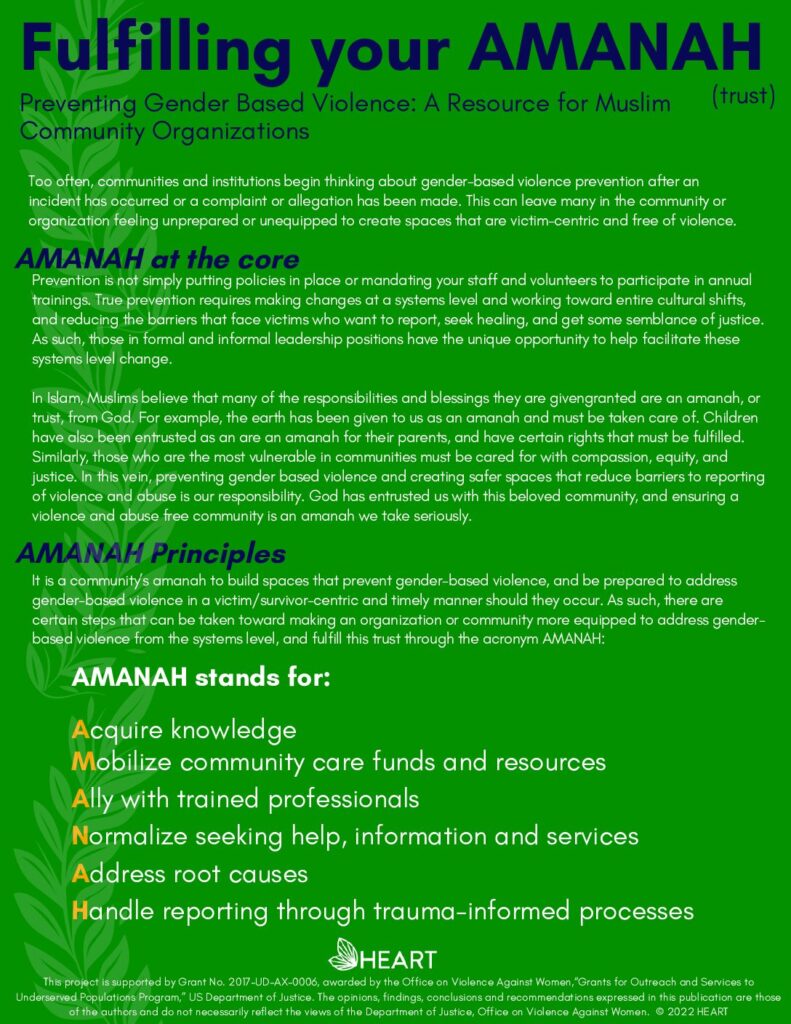
Fulfilling your AMANAH: Framework
In addition to responding to individual victims with RAHMA, communities can work toward proactive prevention through the AMANAH framework. In Islam, Muslims believe that many of the responsibilities and blessings they are granted are an amanah, or trust, from God. In this vein, preventing sexual violence and responding to a disclosure of sexual assault, whether as an individual, and especially as a community or institution, is a great amanah.
Tags: Fulfill your AMANAH, Healing, Institutional Change
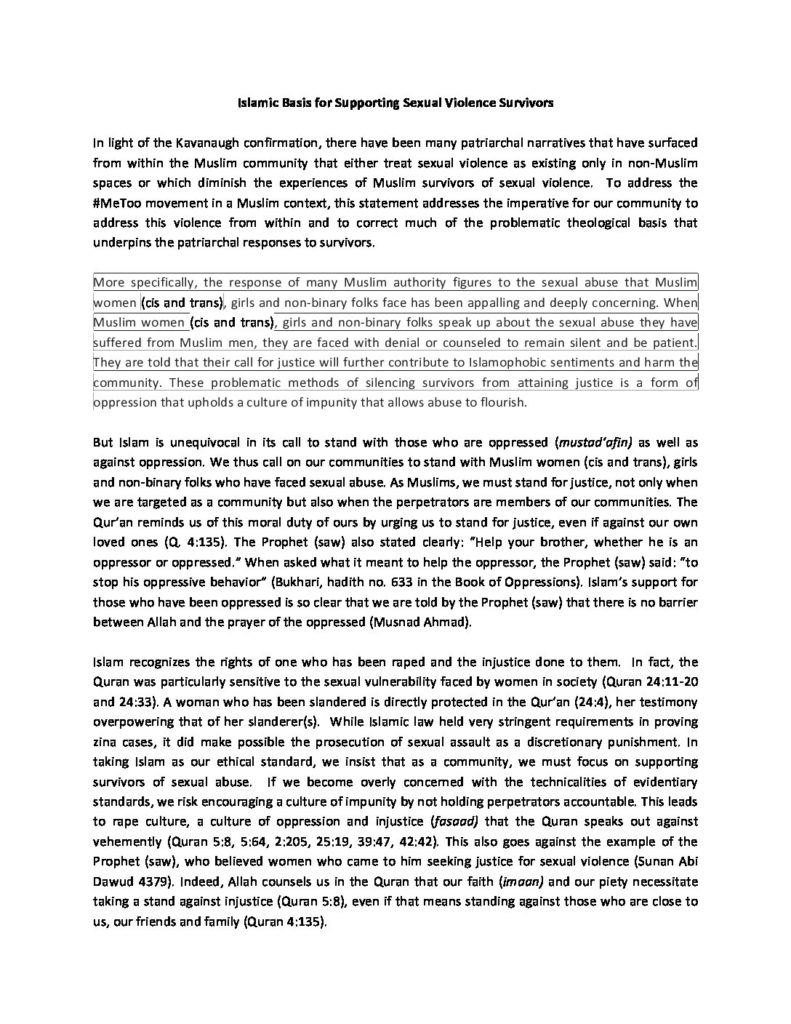
Islamic Basis for Supporting Sexual Violence Survivors
In light of the Kavanaugh confirmation, there have been many patriarchal narratives that have surfaced from within the Muslim community the either treat sexual violence as existing only in non-Muslim spaces or which diminish the experiences of Muslim survivors of sexual violence. To address the #metoo movement in a Muslim context, this statement addresses the imperative for our community to address this violence from within and to correct much of the problematic theological basis that underpins the patriarchal responses to survivors.
Tags: Barriers to Reporting, Fulfill your AMANAH, Healing, Lead with ADALAH, Healing, Responding with RAHMA, Sexual Violence 101, Spiritual Abuse