The allegations against Aziz Ansari have been met with a wide swath of reactions, including in the South Asian community. You may already have a particular viewpoint on the story recounted by Grace about Ansari, or you may have questions and concerns about what you are reading and hearing. We put together this guide to spark greater awareness among South Asians in particular about the range of issues that have arisen in the aftermath of the story about Aziz Ansari. The guide also includes resources for additional reading and sharing.
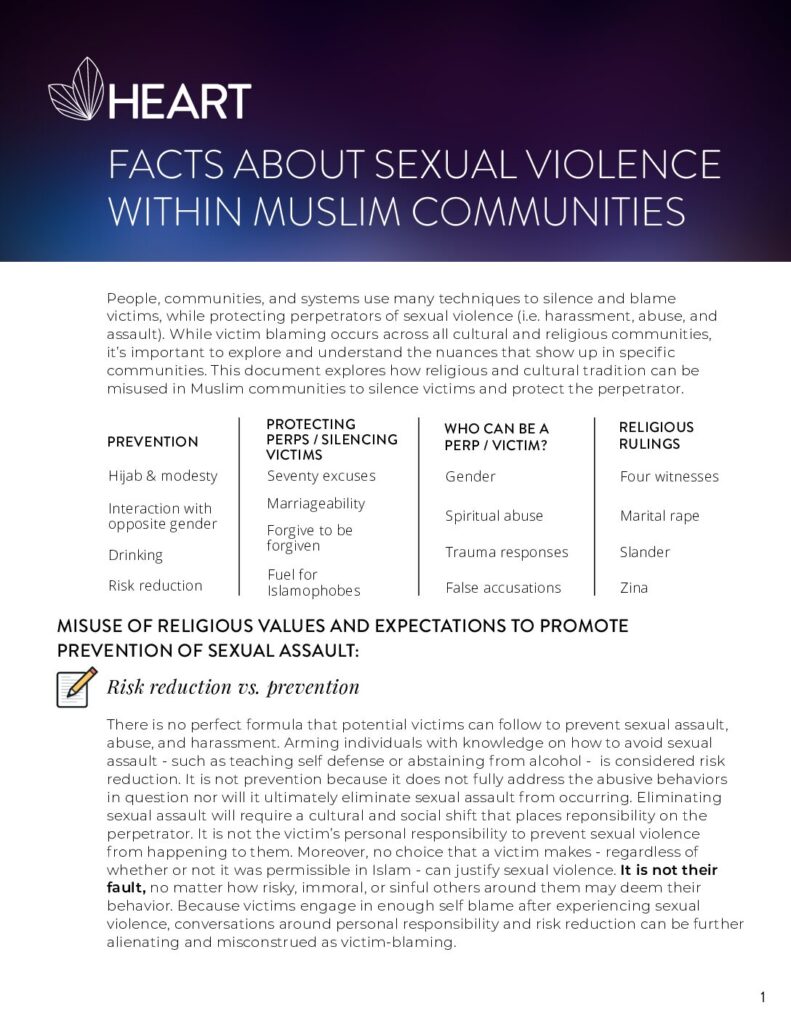
People, communities, and systems use many techniques to silence and blame victims, while protecting perpetrators of sexual violence (i.e. harassment, abuse, and assault). While victim blaming occurs across all cultural and religious communities, it’s important to explore and understand the nuances that show up in specific communities. This document explores how religious and cultural traditions can be misused in Muslim communities to silence victims and protect the perpetrator.
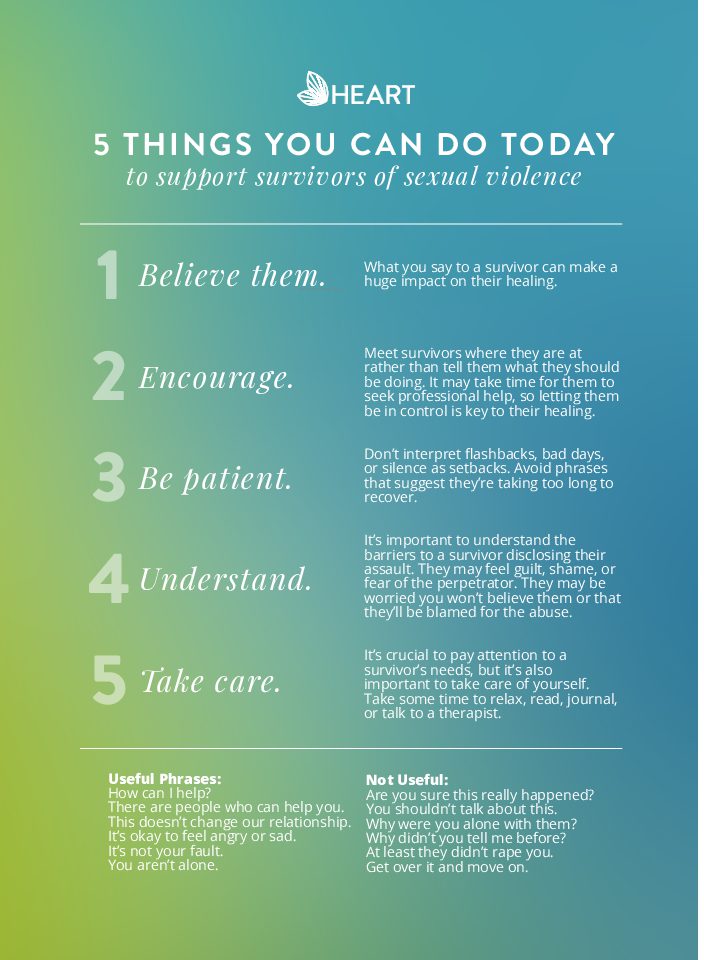
You don’t have to be a sexual violence activist, police officer or social worker to support survivors and work toward prevention. Learn what we all can do to create safer communities.
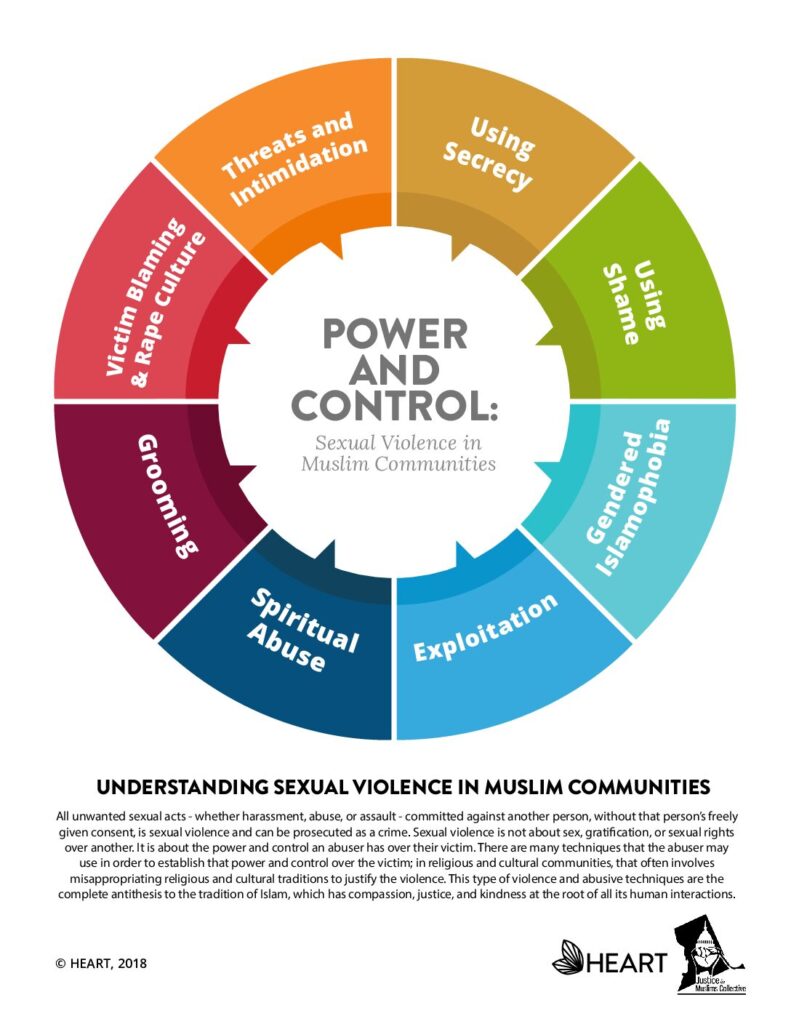
All unwanted sexual acts committed against another person, without that person’s freely given consent, is sexual violence and can be prosecuted as a crime. This tool is a collaborative effort between HEART and Justice for Muslims Collective, and explores the various techniques abusers may use to have power over their victims, in Muslim communities.
As we embark on Sexual Assault Awareness Month (2017), you will hear many important facts and information about sexual assault, its impact, its prevalence, and how we can begin working toward prevention. This year, at HEART, we would like to raise awareness on why victims don’t tell. Disclosing sexual assault is a complicated and personal decision. Often, victims tell and are not believed or are blamed. Other times, they don’t tell because of the numerous emotions they may be feeling. We hope that you find this video informative, and that you will share this video with your family and friends. Most of all, we hope that it challenges you to think about the role you can play in supporting sexual assault survivors moving forward. It is important to think about the role we play as bystanders in making our communities safer for our victims. The next time you wonder why victims don’t tell or why many years passed before they did tell, remember the grim reality that only 2% of those who offend actually make it to jail. And remember that often times, the answer to “why don’t victims tell” is actually that they did. It’s just that they weren’t heard.
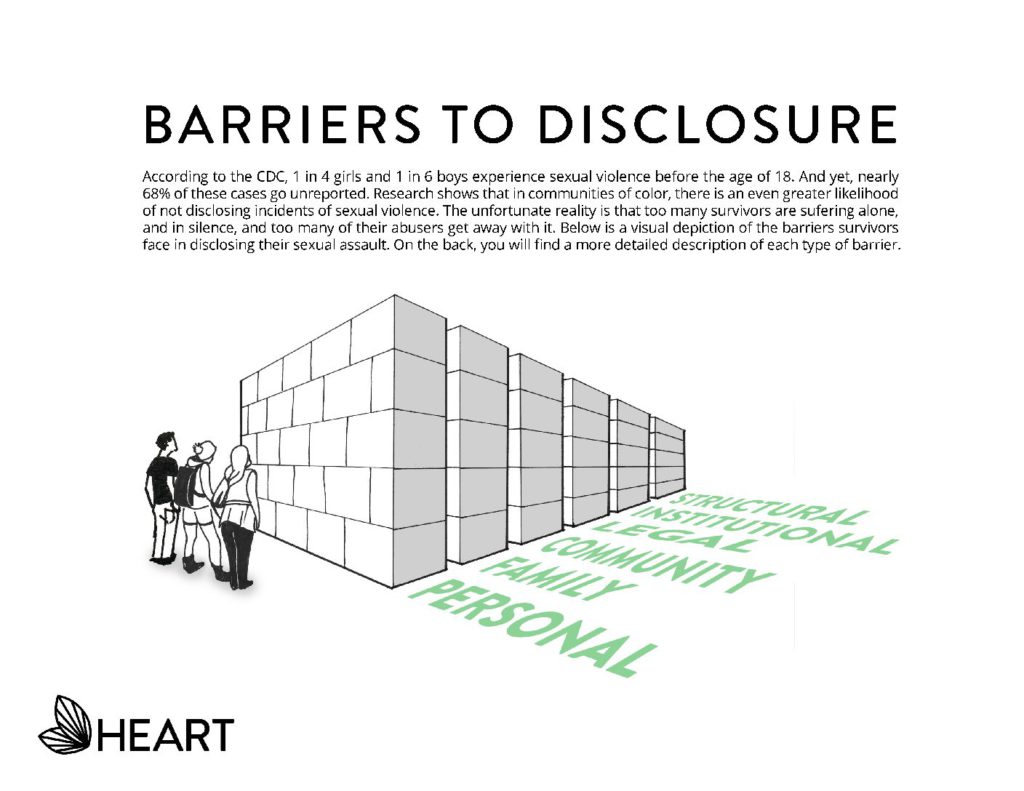
According to the CDC, 1 in 4 girls and 1 in 6 boys experience sexual violence before the age of 18. And yet, nearly 68% of these cases go unreported. Research shows that in communities of color, there is an even greater likelihood of not disclosing incidents of sexual violence. The unfortunate reality is that too many survivors are suffering alone, and in silence, and too many of their abusers get away with it. This document is a visual depiction of the barriers survivors face in disclosing their sexual assault. On the back, you will find a more detailed description of each type of barrier.
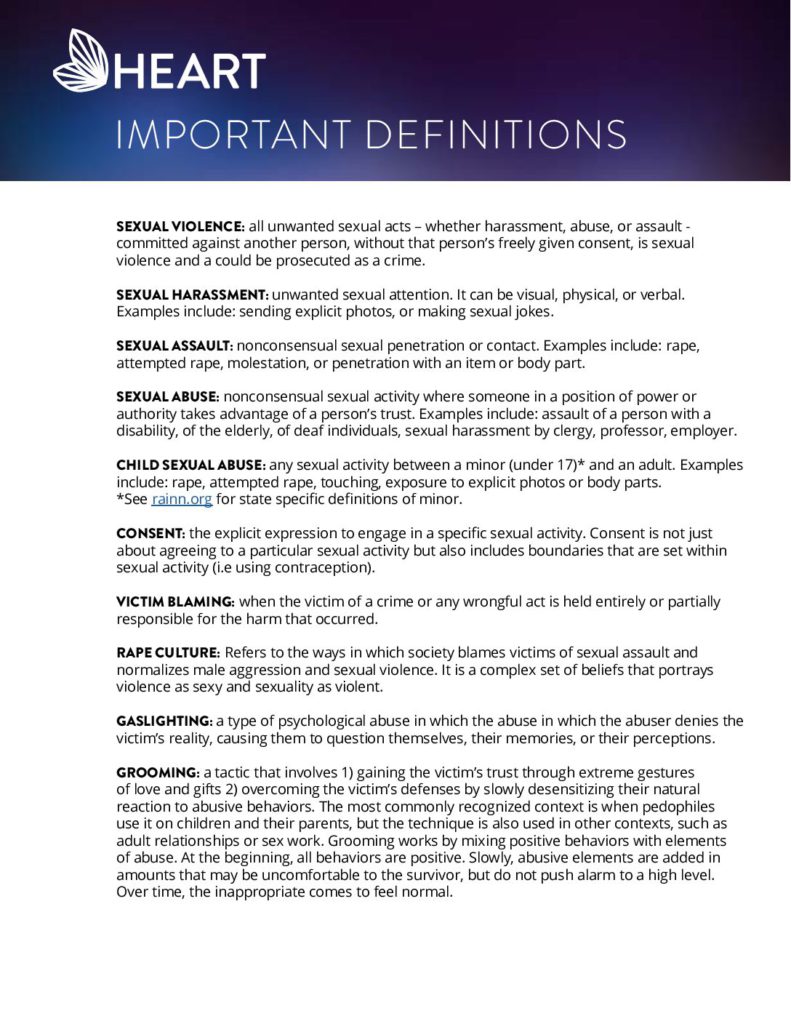
The following resource defines commonly used terms related to sexual violence.
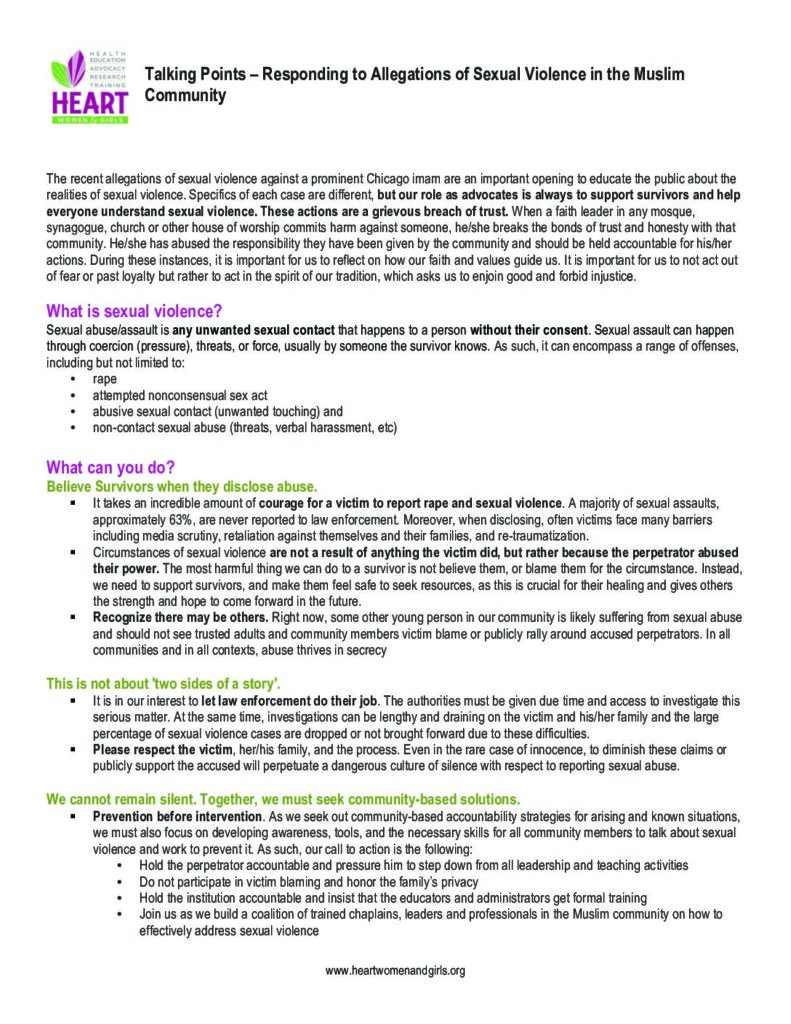
The allegations of sexual violence against religious leaders are an important opening to educate the public about the
realities of sexual violence. The specifics of each case are different, but our role as advocates is always to support survivors and help everyone understand sexual violence. These actions are a grievous breach of trust. When a faith leader in any mosque, synagogue, church or other house of worship commits harm against someone, he/she breaks the bonds of trust and honesty with that community. He/she has abused the responsibility they have been given by the community and should be held accountable for his/her actions. During these instances, it is important for us to reflect on how our faith and values guide us. It is important for us to not act out of fear or past loyalty but rather to act in the spirit of our tradition, which asks us to enjoin good and forbid injustice.