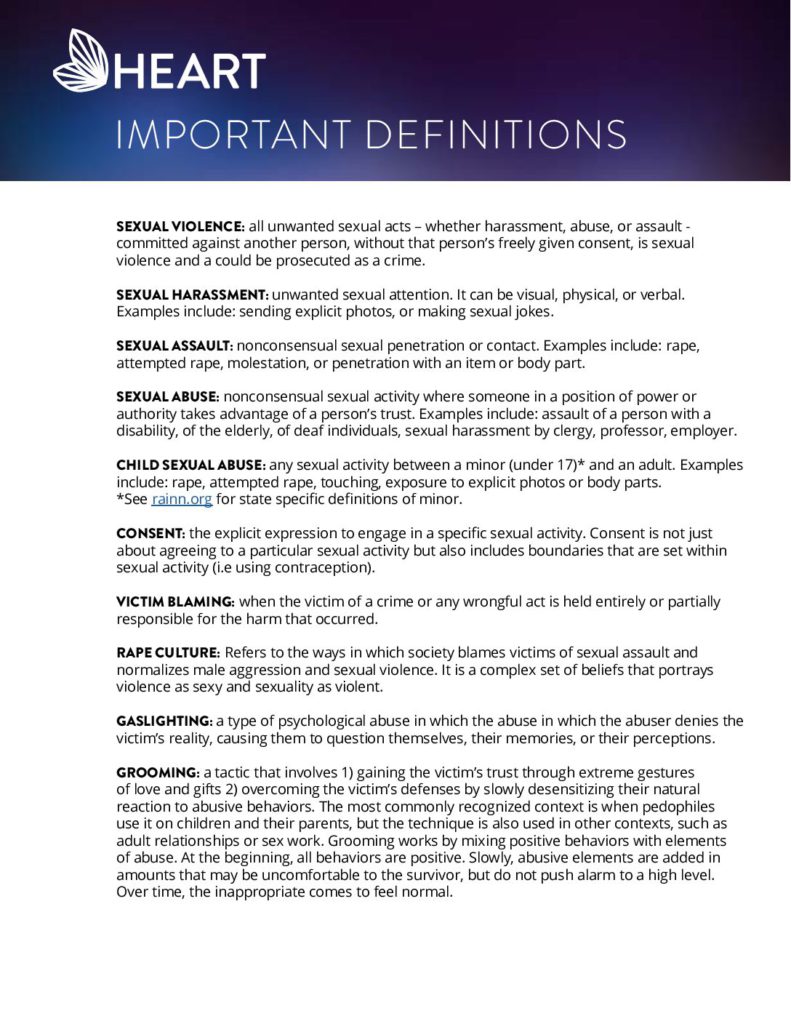
The following resource defines commonly used terms related to sexual violence.
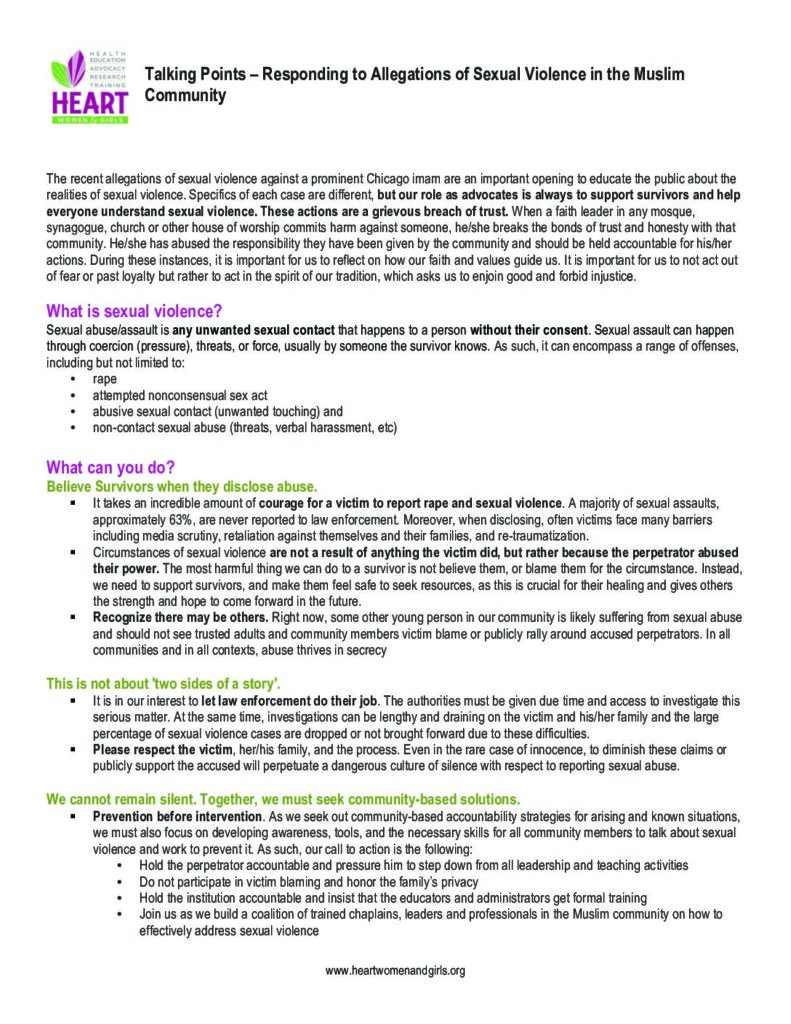
The allegations of sexual violence against religious leaders are an important opening to educate the public about the
realities of sexual violence. The specifics of each case are different, but our role as advocates is always to support survivors and help everyone understand sexual violence. These actions are a grievous breach of trust. When a faith leader in any mosque, synagogue, church or other house of worship commits harm against someone, he/she breaks the bonds of trust and honesty with that community. He/she has abused the responsibility they have been given by the community and should be held accountable for his/her actions. During these instances, it is important for us to reflect on how our faith and values guide us. It is important for us to not act out of fear or past loyalty but rather to act in the spirit of our tradition, which asks us to enjoin good and forbid injustice.
Content warning: Sexual violence.
This video is one of three that were created for Sexual Assault Awareness Month (2019), by spoken word artists in the DC area, in collaboration with The Sanctuaries. This spoken word piece is titled "98 seconds."
How should we teach children about their sexual anatomy? Nicknames for sexual anatomy can often do more harm than good. This HEART to HEART video gives parents the information and language to educate their children about their body.
A collaborative between the Chicago Alliance Against Sexual Exploitation (CAASE), HEART, the Rahma Network, and KARAMAH, this toolkit is for groups within Muslim communities and any other individuals of faith who are passionate about ending sexual exploitation. This toolkit provides background information on issues surrounding prostitution and other forms of sexual exploitation and can be used to raise awareness and mobilize your community to join the fight to end sexual exploitation.
This guide offers parents information on sexual violence and tools on how to have ongoing conversations on this important topic throughout childhood and adolescent. Written in a FAQ format, you will find the following information in this guide: background information on sexual violence, including definitions and statistics, how to recognize if your child is a victim of sexual violence and tips on how to have these conversations in an age-appropriate manner with each of your children.
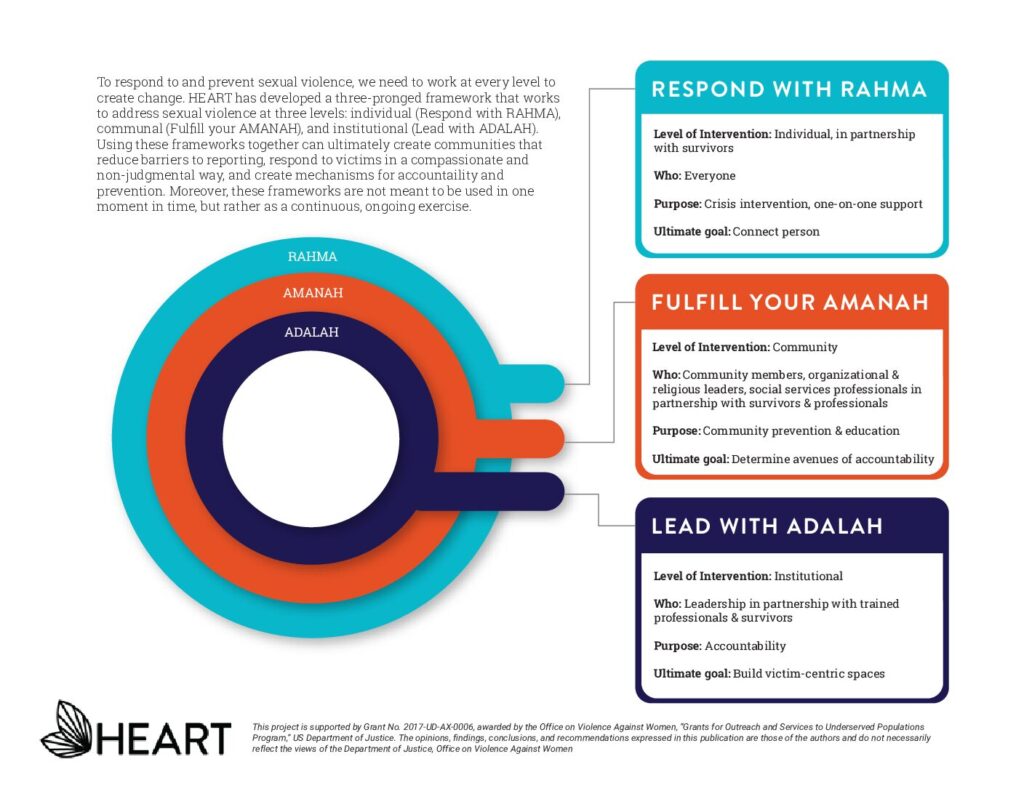
To respond to and prevent sexual violence, we need to work at every level to create change. HEART has developed a three-pronged framework that works to address sexual violence at three levels: individual (Respond with RAHMA), communal (Fulfill your AMANAH), and institutional (Lead with ADALAH). Check out the accompanying handouts to learn more about the RAHMA, AMANAH, and ADALAH frameworks in our resource library as well.
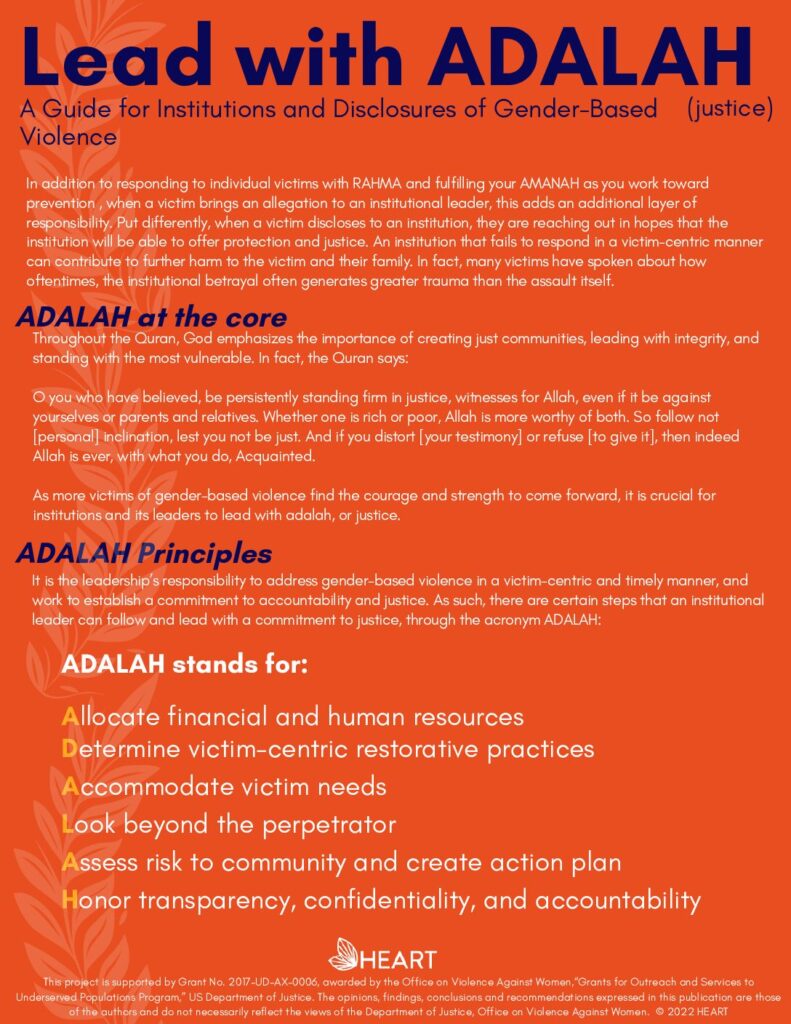
As more victims of sexual violence find the courage and strength to come forward, it is crucial for institutions and their leaders to lead with ADALAH, or justice, by addressing sexual violence in a victim-centric and timely manner, and working to establish a commitment to accountability. In addition to responding to disclosures with RAHMA and working toward prevention to fulfill an AMANAH, the ADALAH principles offer organizational leaders with steps that they can take to ensure that they are equipped to address sexual violence disclosures with a victim-centered, trauma-informed, transparent approach.