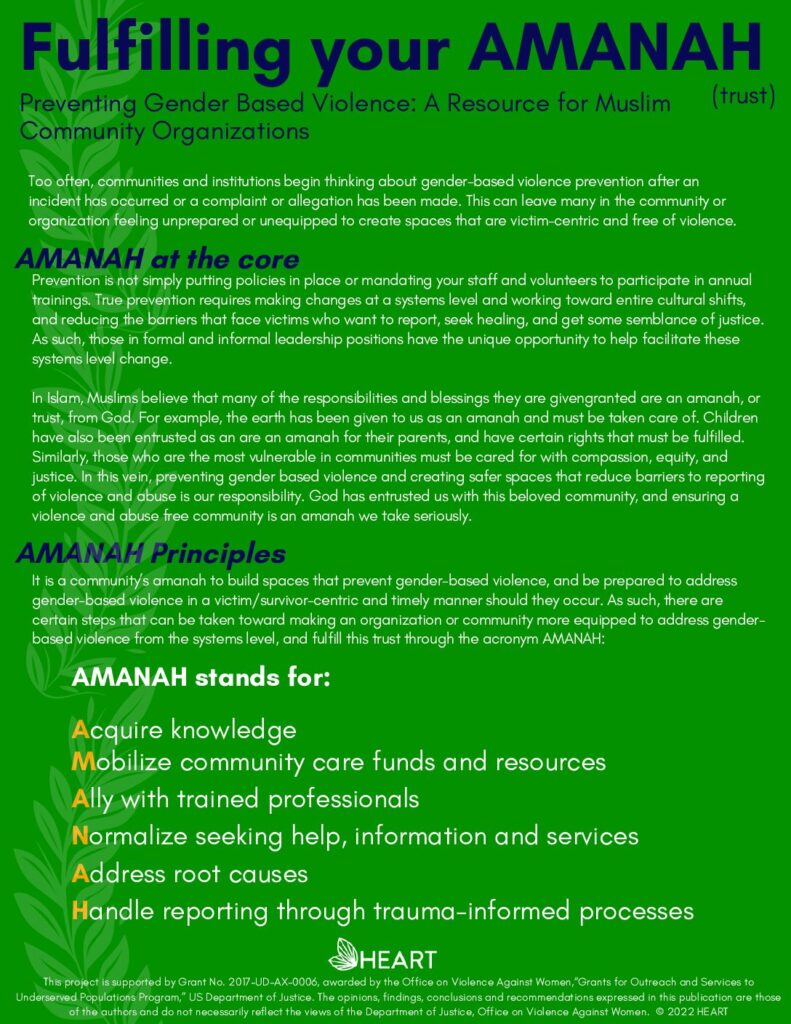
In addition to responding to individual victims with RAHMA, communities can work toward proactive prevention through the AMANAH framework. In Islam, Muslims believe that many of the responsibilities and blessings they are granted are an amanah, or trust, from God. In this vein, preventing sexual violence and responding to a disclosure of sexual assault, whether as an individual, and especially as a community or institution, is a great amanah.
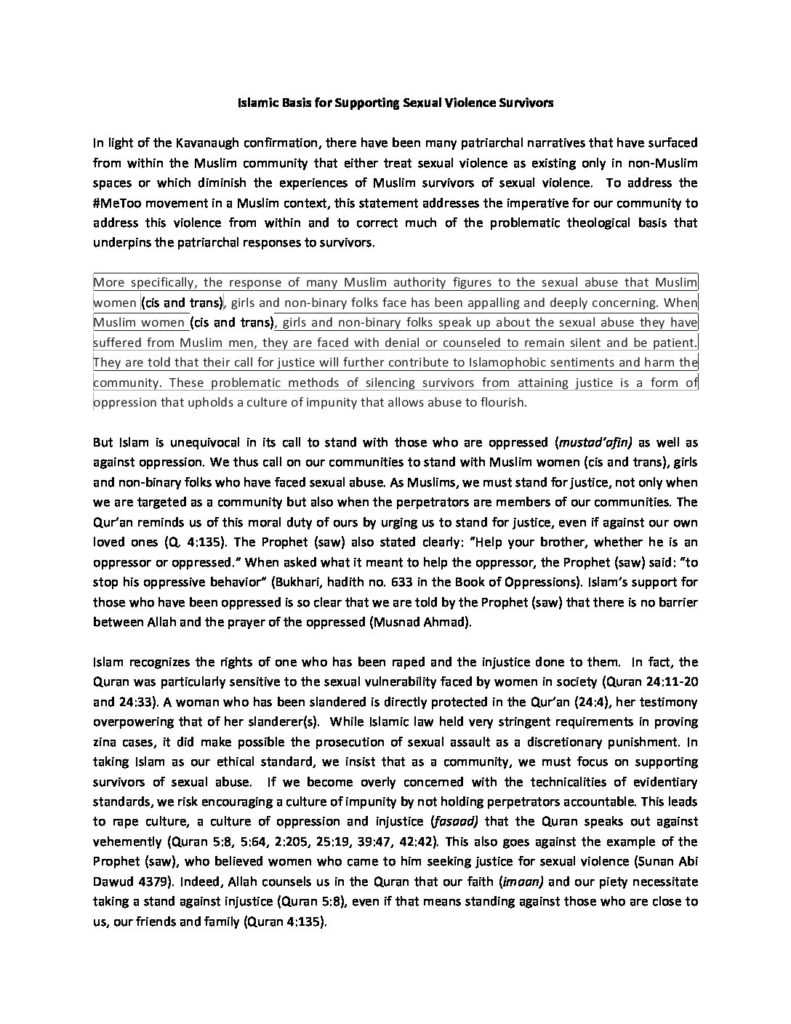
In light of the Kavanaugh confirmation, there have been many patriarchal narratives that have surfaced from within the Muslim community the either treat sexual violence as existing only in non-Muslim spaces or which diminish the experiences of Muslim survivors of sexual violence. To address the #metoo movement in a Muslim context, this statement addresses the imperative for our community to address this violence from within and to correct much of the problematic theological basis that underpins the patriarchal responses to survivors.
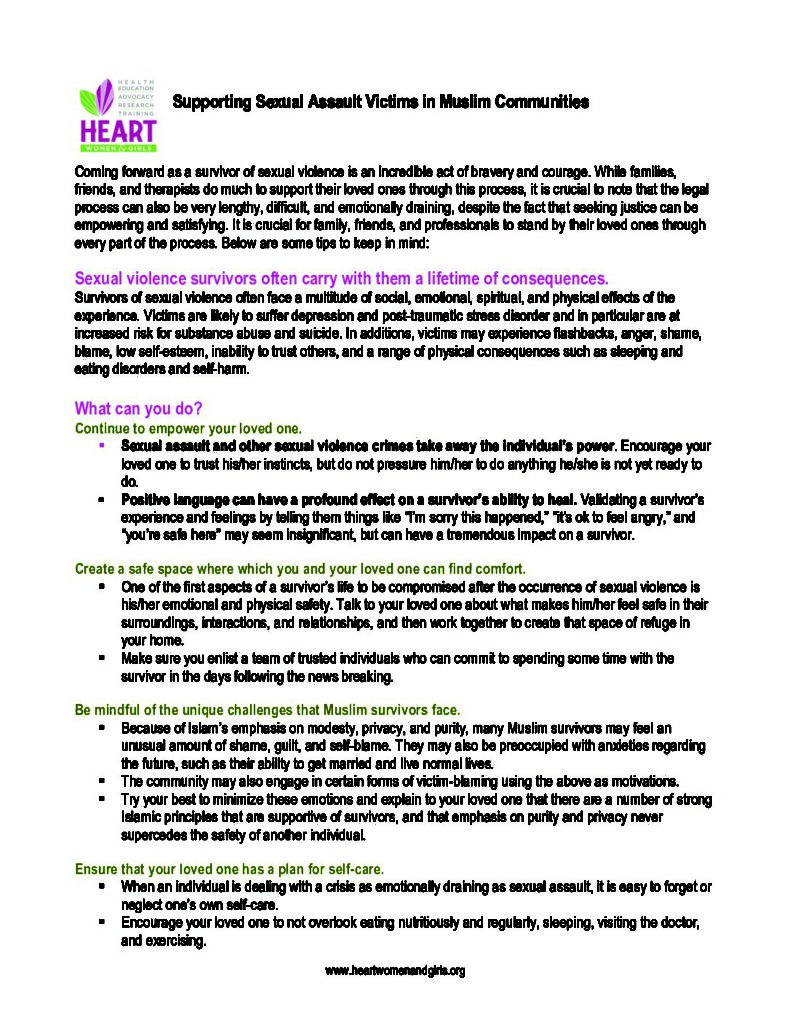
Coming forward as a survivor of sexual violence is an incredible act of bravery and courage. While families, friends, and therapists do much to support their loved ones through this process, it is crucial to note that the legal process can also be very lengthy, difficult, and emotionally draining, despite the fact that seeking justice can be empowering and satisfying. It is crucial for family, friends, and professionals to stand by their loved ones through every part of the process. These are some tips to keep in mind.
Responding with RAHMA has been our theme for this year's (2018) Sexual Assault Awareness Month (SAAM). The following video has been created to uplift narratives of survivors within our communities, and how we can all respond with RAHMA.
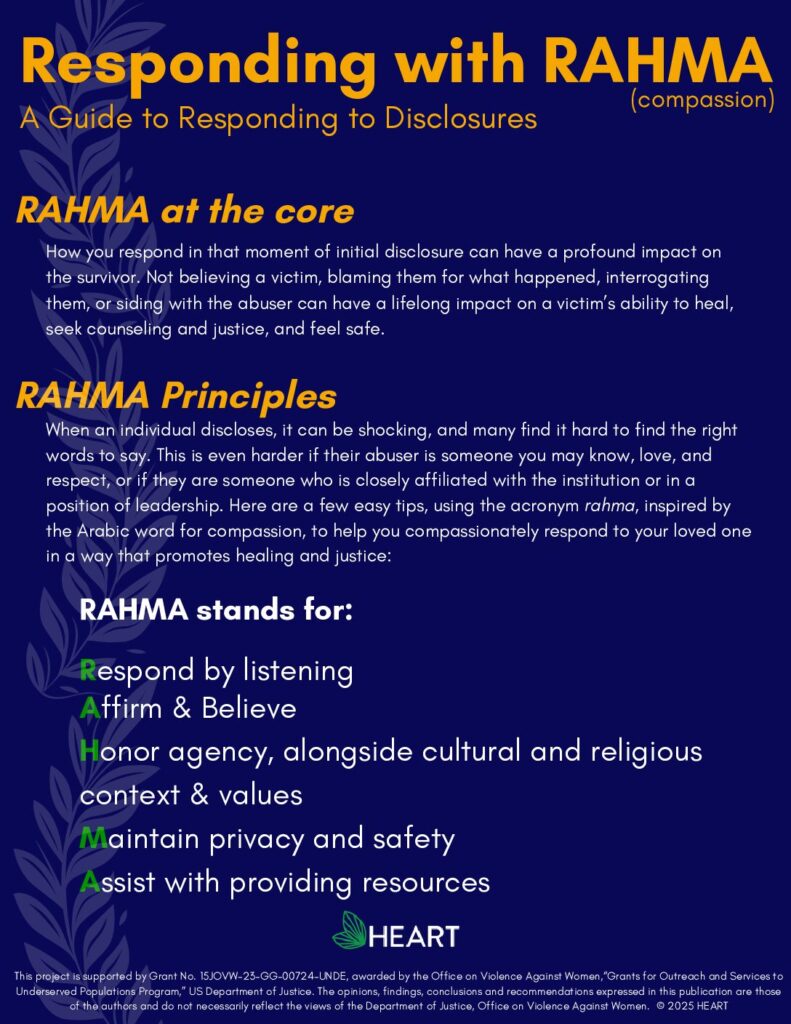
The RAHMA framework (inspired by the Arabic word for compassion) offers practical steps to help you respond to a disclosure in a way that centers the survivor's needs and supports their healing journey.
Surviving sexual assault can be a terrifying and lonely experience. Here is our message to the survivors in the world in honor of Sexual Assault Awareness Month (2017).
Special thanks to: Breaking Silence Documentary, Kinza Khan, Sarah Hasan, Jenan Mohajir, Ryan Hilliard, Nadya Ali, Navila Rashid, Sarah Rashid, Shabana Mir, Mat Schramm, Kat Stuehrk, Sheerin Siddique, Salah Anwar, Yuriy Loukachev, and Nicole Goodwin.