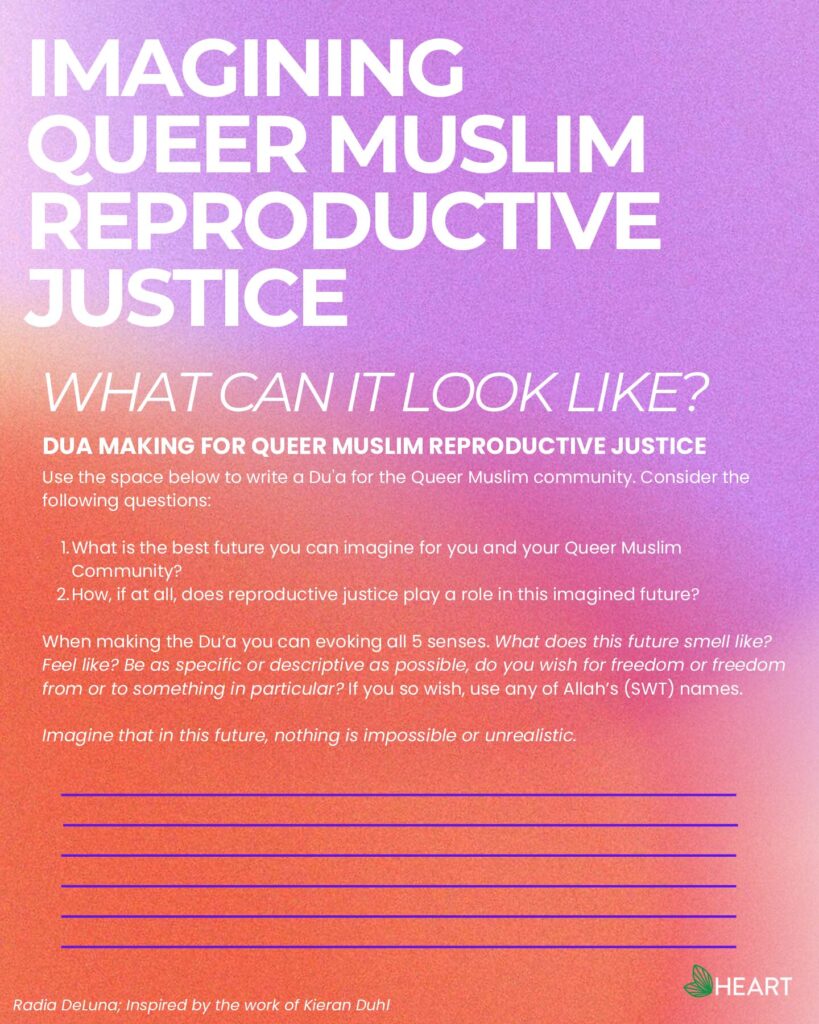
There is a clear gap of research exploring the U.S. Muslims and their experiences in managing systemic reproductive oppression. Without identifying the issues, how can healing begin? The present study aims to explore how queer Muslims engage with reproductive justice.
Through a series of semi-structured interviews with queer Muslims across the United States, we (1) explore how queer Muslims engage with reproductive justice work in their every-day lives, and (2) identify recommended areas of support for queer Muslims.
Participants were asked to bring 2 photos to describe their reproductive story. They were also asked to make a duaa for Queer Muslim communities. Below are instructions adapted from those activities. Please feel free to download them and use them with credit to Radia and if you wish to connect with her about her research, she can be reached at rmchab2@illinois.edu.
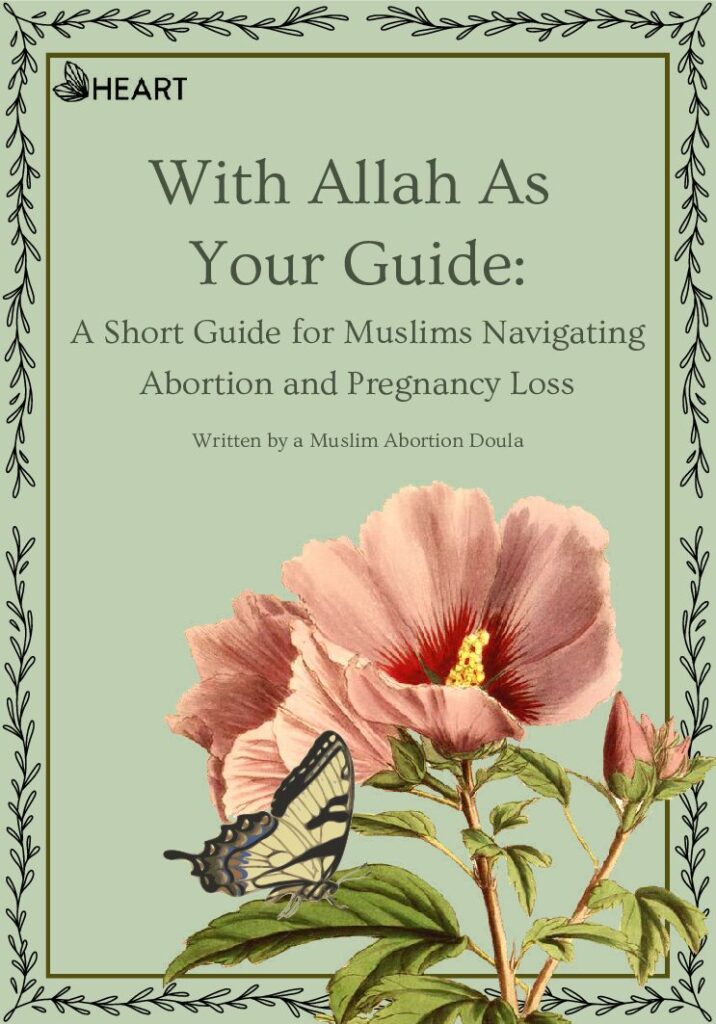
"With Allah As Your Guide” is a short, intimate zine created for Muslims navigating abortion and pregnancy loss. Informed by Ja’Loni’s direct experience as an abortion doula amidst increasing criminalization in the U.S. South, this guide offers practical, spiritual, and emotional companionship. This resource is an act of community care, reclaiming the narrative of reproductive choice as an expression of faith and trust in Allah’s plan.
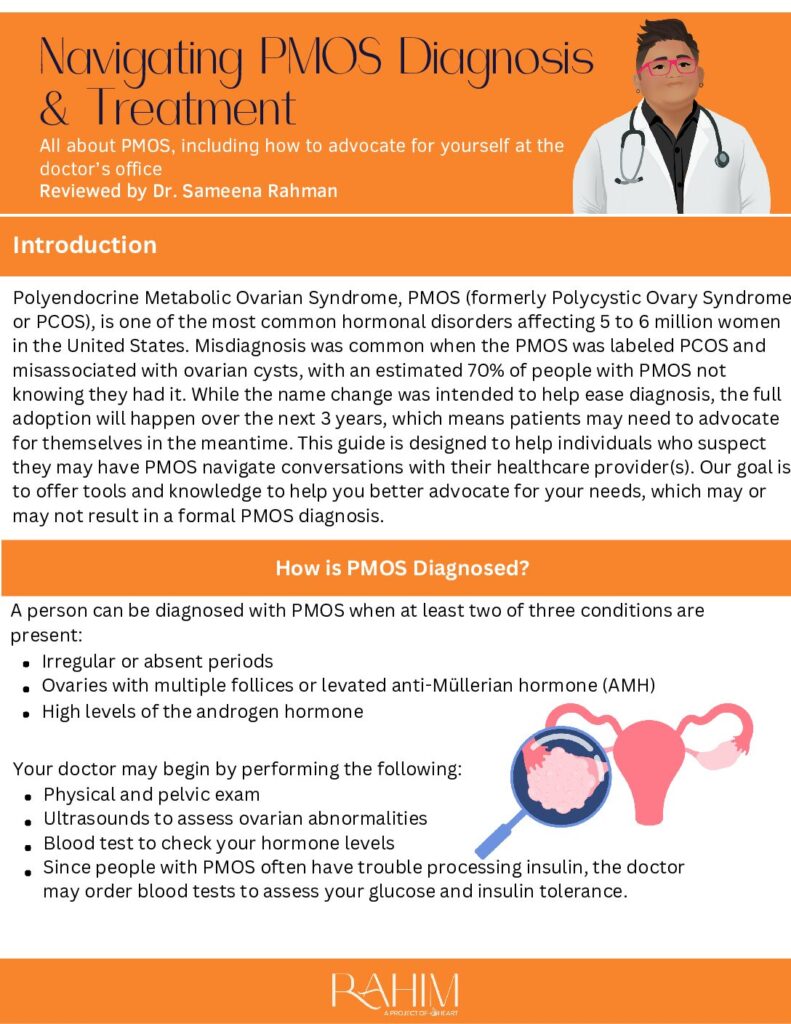
Getting a Polyendocrine Metabolic Ovarian Syndrome (PMOS) diagnosis (formerly Polycystic Ovary Syndrome or PCOS), can be time-consuming and frustrating. Use this resource to learn how PMOS is diagnosed and how you can advocate for yourself at the doctor's office if you think you have PMOS.
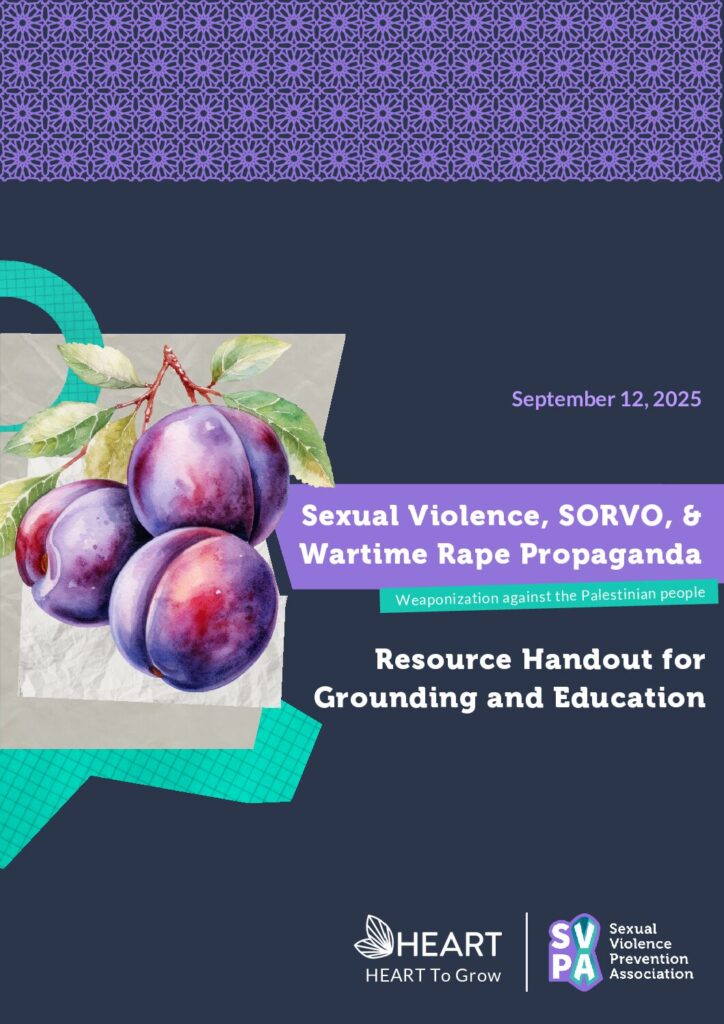
Learning about sexual violence, wartime rape propaganda, and the tactics used by aggressors to further genocides can bring up valid responses within our bodies that may lead to distress and emotional dysregulation. This handout contains guidance, educational information, and links to trusted external resources for emotional regulation and further learning.
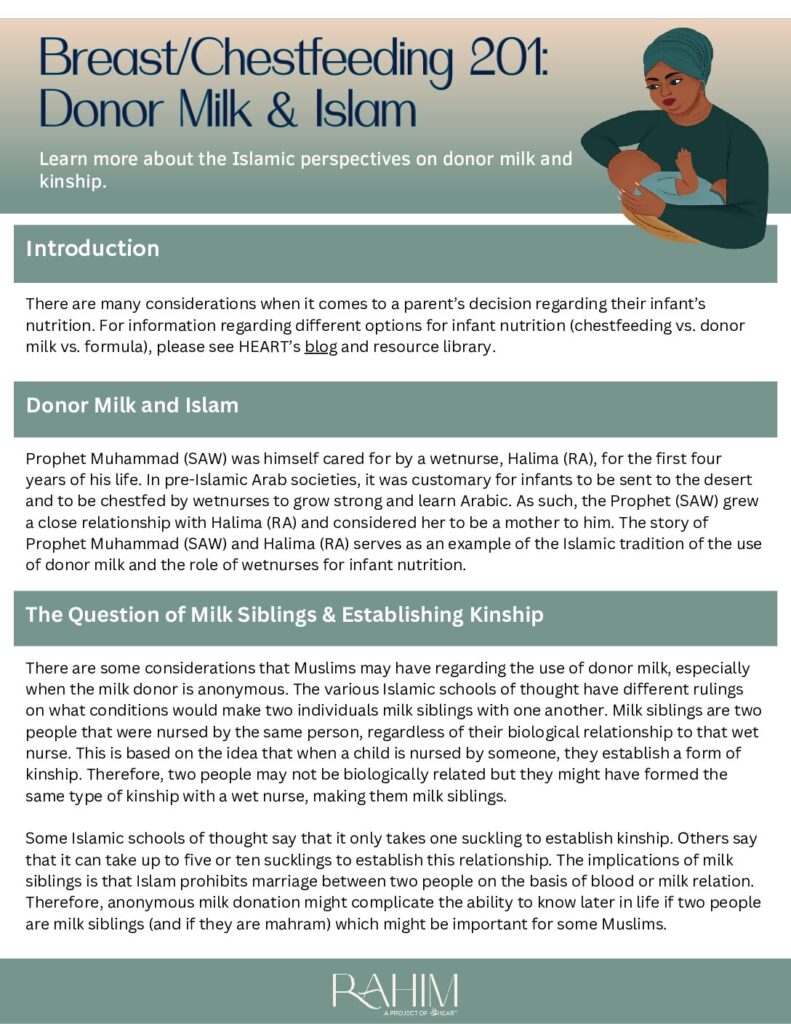
Use this resource to learn more about the Islamic perspectives on donor milk and kinship considerations.
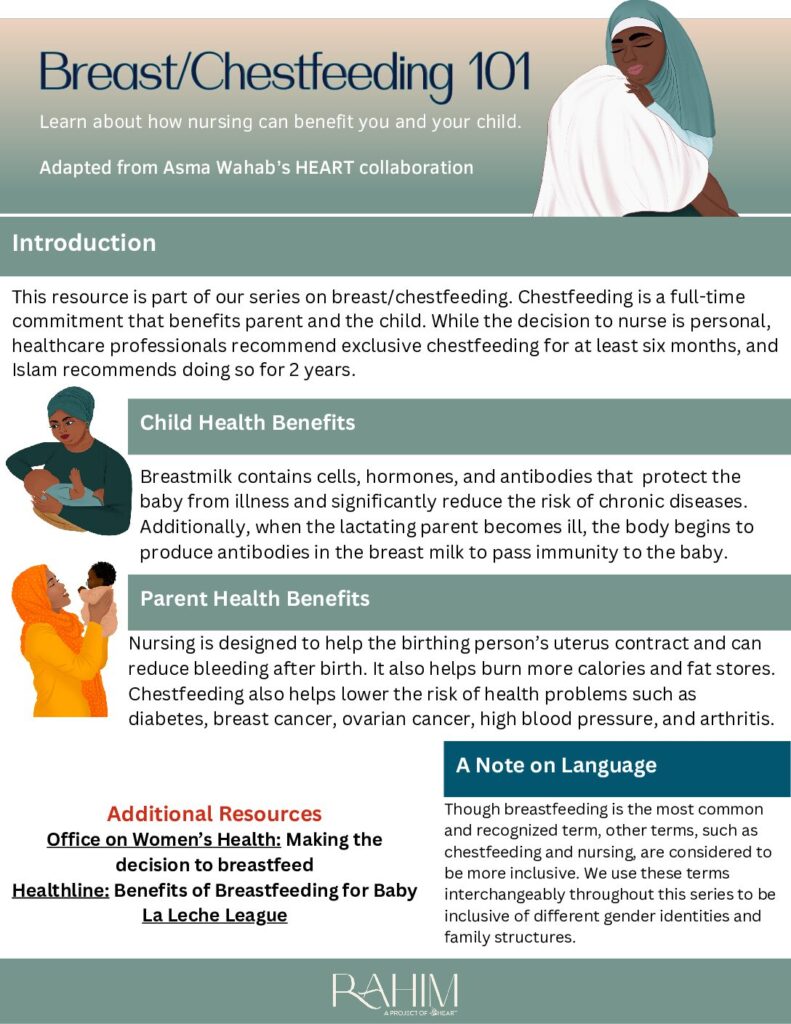
Use this resource to learn about the benefits of chestfeeding, understand common challenges, and get some answers to common questions.
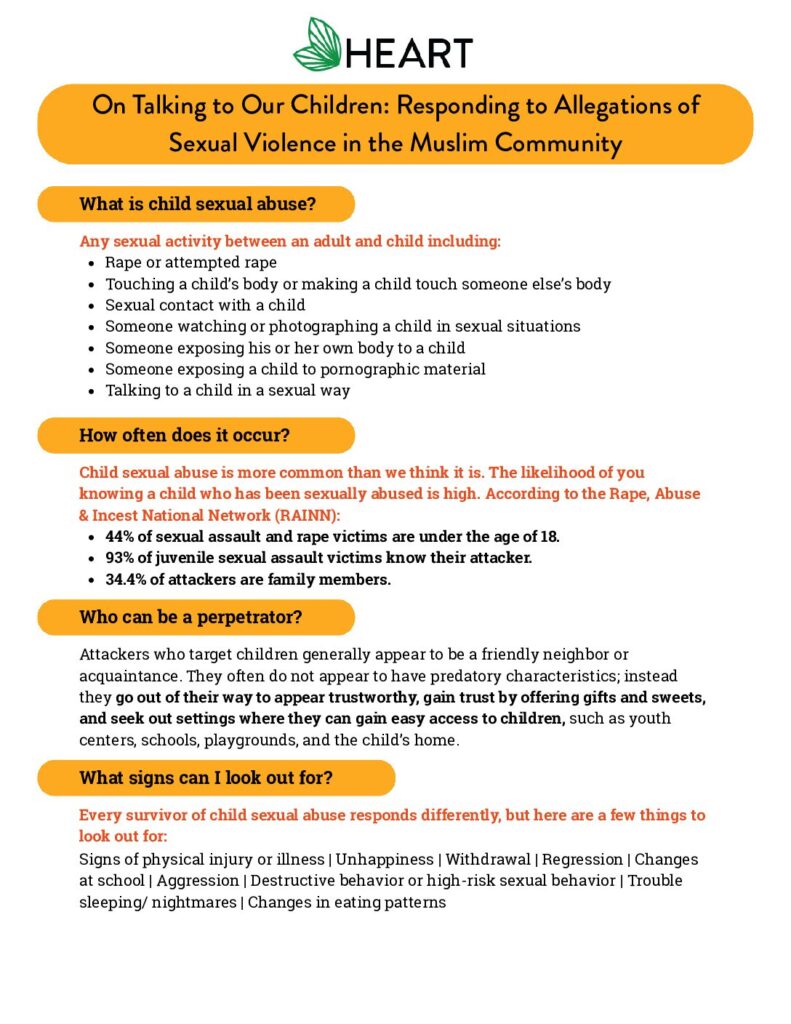
An update version of an existing resource; how to understand child sexual abuse, and what you can do as a community member.
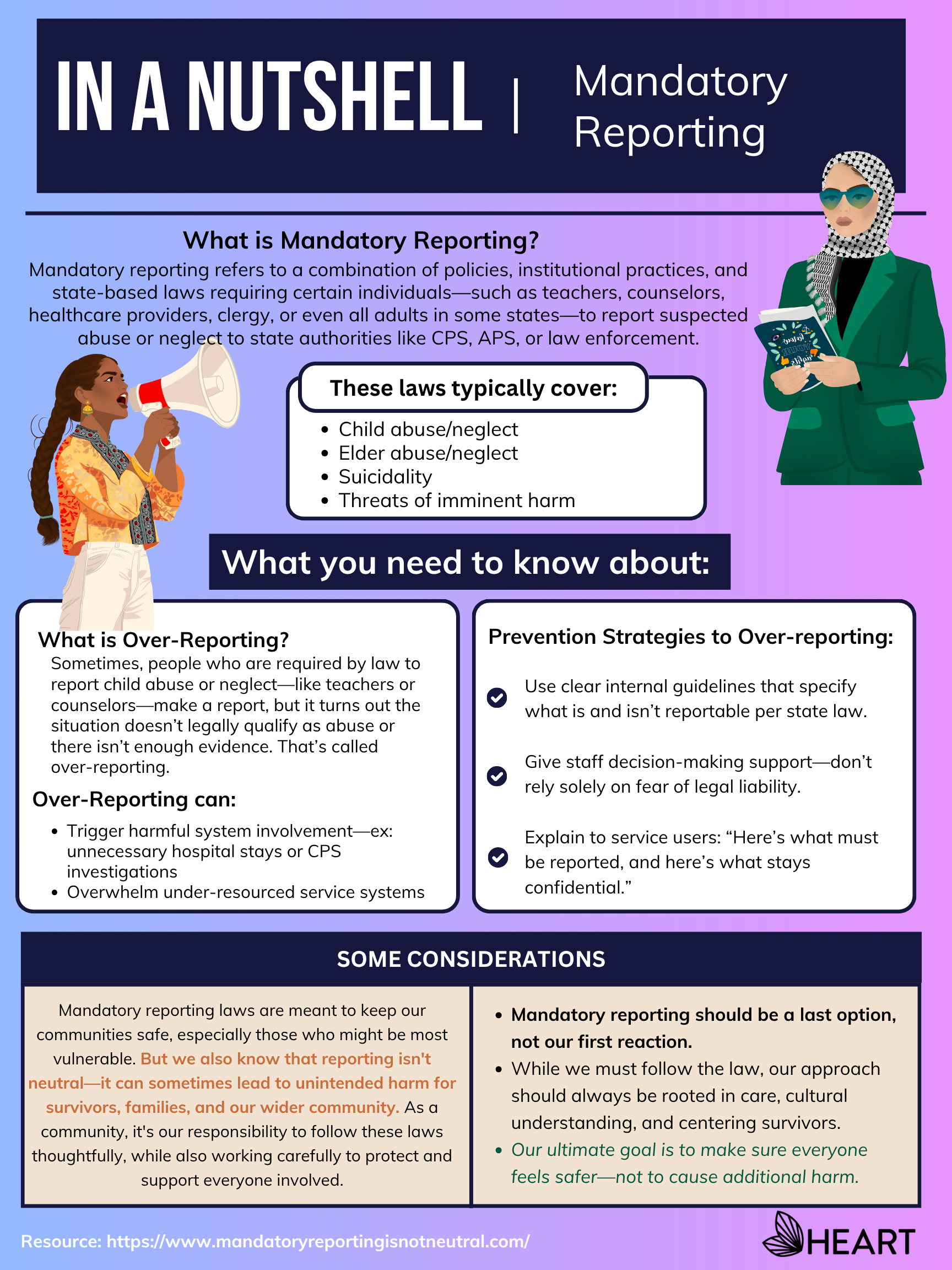
Understanding what mandatory reporting is, and its implications, and what you can do in the community.