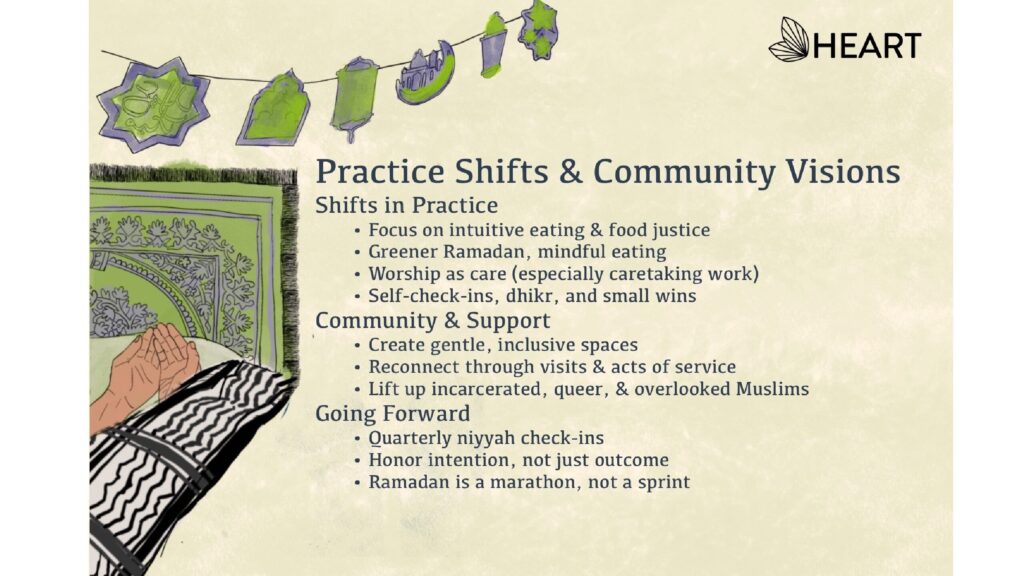
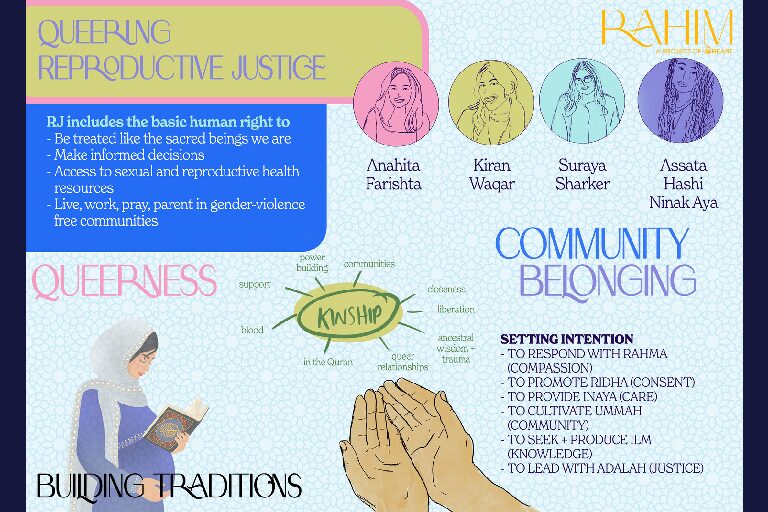
Over four weeks, Muslims from all around the world gathered in virtual community to renew our individual and collective niyyah (intention) with HEART Chaplains, Seher and Amany. In this virtual space, we heard stories about the Prophet (pbuh), women in Islamic history, and more, as well as reflected on thehttps://hearttogrow.org/resources/niyyah-worksheets/NIYYAH worksheet. This year, we were also lucky enough to have a graphic illustrator summarize and illustrate some of the key takeaways from this blessed space.
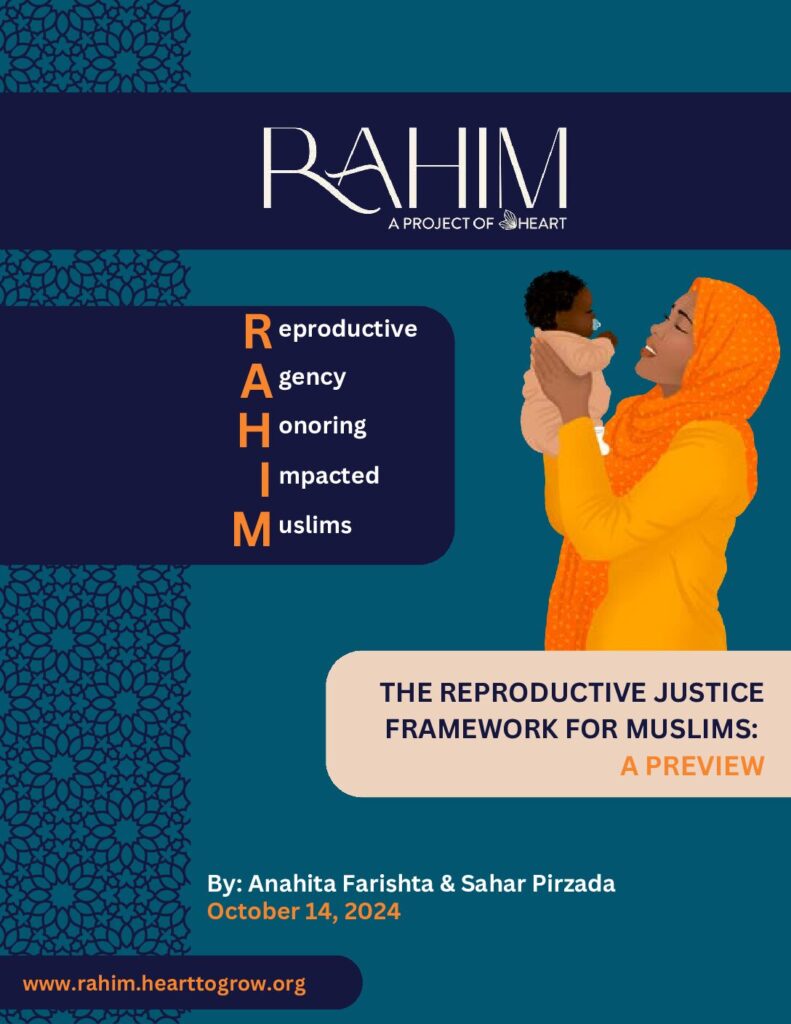
This reproductive justice framework bridges the systemic with the communal and interpersonal barriers to care and offers a vision for what it means for an individual to exercise a fullness of choice over their bodies, safety and healthcare. Most importantly, this framework prioritizes the inclusion of the lived experiences and needs of impacted Muslims navigating sexual and reproductive decision making. This framework is a way to contextualize the struggles so many in our communities are dealing with in our specific socio-cultural and political landscape. It honors the role that Islam can and does play for empowered, faith aligned, and informed reproductive agency for Muslims.
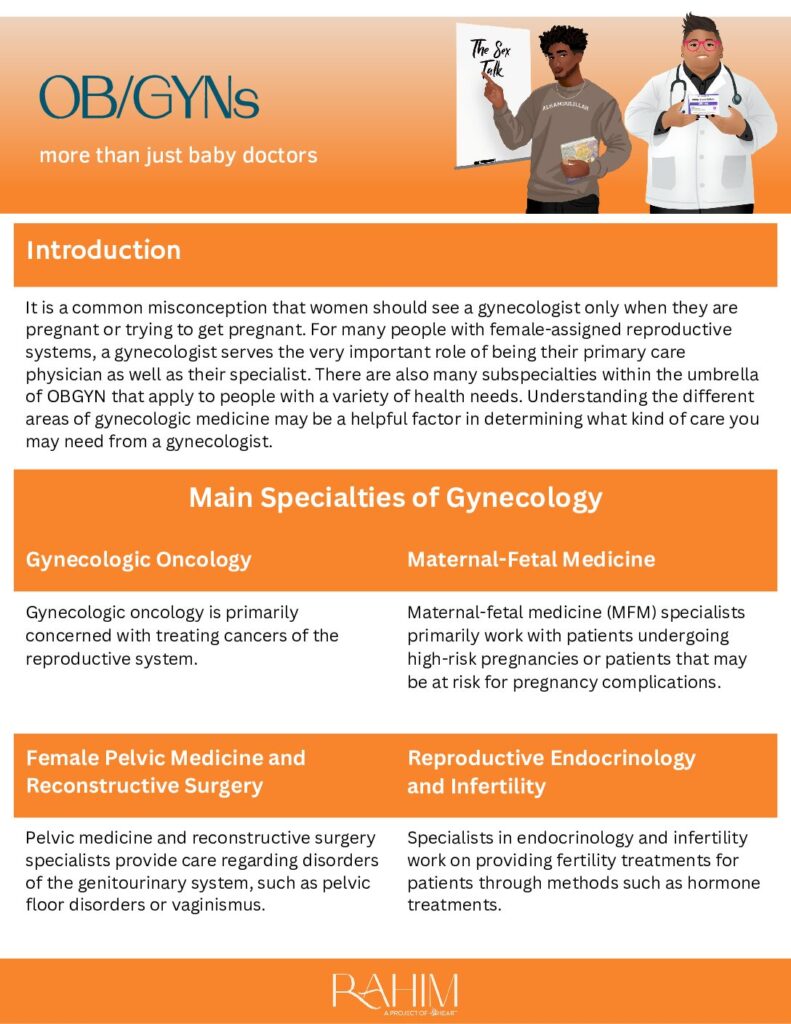
Understanding the different areas of gynecologic medicine may be a helpful factor in determining what kind of care you may need from a gynecologist.
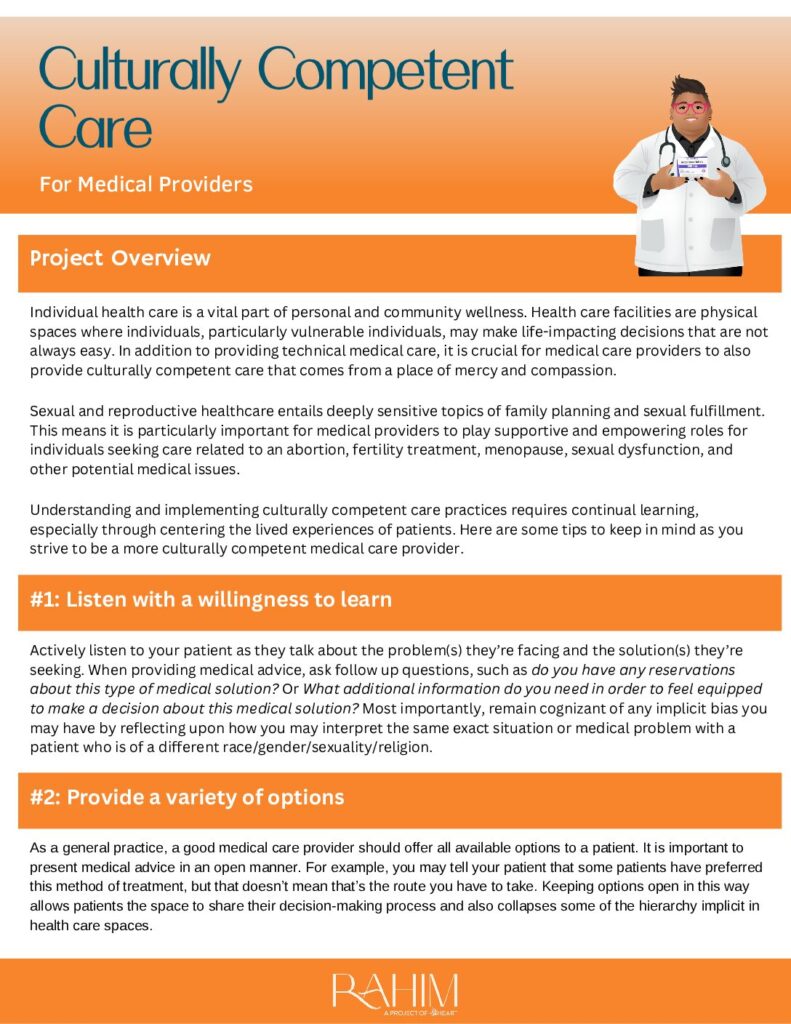
Understanding and implementing culturally competent care practices requires continual learning, especially through centering the lived experiences of patients. Here are some tips to keep in mind as you strive to be a more culturally competent medical care provider.
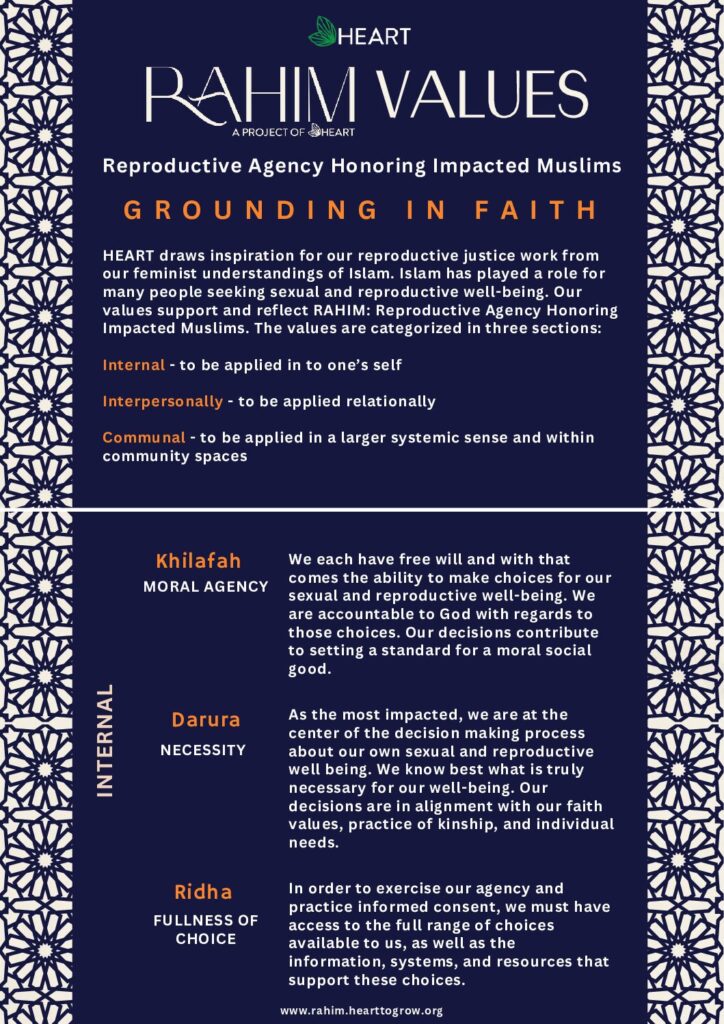
RAHIM Values: HEART draws inspiration for our reproductive justice work from our feminist understandings of Islam. Islam has played a role for many people seeking sexual and reproductive well-being. Our values support and reflect RAHIM: Reproductive Agency Honoring Impacted Muslims. The values are categorized in three sections:
Internal - to be applied in to one’s self
Interpersonally - to be applied relationally
Communal - to be applied in a larger systemic sense and within community spaces